

Bacteriostatic Water: 3ml*10 vials (30ml)
$22.00
Bacteriostatic Water 3mL × 10 vials (30mL) for qualified laboratory and research applications requiring sterile water containing a bacteriostatic preservative.
Description
Bacteriostatic Water is a type of sterile water containing a small amount of an antimicrobial preservative. It is commonly distinguished from preservative-free sterile water because the added preservative can inhibit the growth of microorganisms under specified conditions.
Our Bacteriostatic Water 3mL × 10 vials (30mL total) product is intended for qualified laboratory and research applications where an appropriately prepared bacteriostatic aqueous medium is required.
Each package contains 10 individual 3mL vials, providing a total labeled volume of 30mL.
For research laboratories, quality and traceability matter. Researchers should therefore evaluate the product’s labeling, composition, sterility information, packaging, lot identification, expiration information, and applicable documentation before selecting a laboratory water product.
What Is Bacteriostatic Water?
Bacteriostatic Water is sterile water that contains a bacteriostatic preservative.
The term “bacteriostatic” describes the ability to inhibit bacterial growth under appropriate conditions. It does not mean that the water kills every microorganism or remains sterile indefinitely after opening.
This distinction is important.
Sterile water and bacteriostatic water are not necessarily interchangeable products. Their formulation, intended use, labeling, and regulatory status can differ.
Researchers should always examine the specifications of the particular product rather than assuming that every sterile water product has the same composition.
What Is the Difference Between Sterile Water and Bacteriostatic Water?
Both products can involve sterile water, but their formulations differ.
Sterile water generally refers to water that has been processed to meet a specified sterility requirement without necessarily containing an antimicrobial preservative.
Bacteriostatic Water, by contrast, contains an antimicrobial preservative intended to inhibit microbial growth.
One commonly used preservative is benzyl alcohol.
Because the formulation differs, researchers should select laboratory water according to the requirements of their specific experimental protocol.
What Is Benzyl Alcohol?
Benzyl alcohol is an aromatic alcohol used in various pharmaceutical, cosmetic, and laboratory formulations.
In bacteriostatic water products, it can function as an antimicrobial preservative.
The presence of benzyl alcohol is one of the characteristics that distinguishes bacteriostatic water from many preservative-free sterile-water formulations.
However, the exact formulation should always be confirmed from the product label and accompanying documentation.
Researchers should not assume the concentration or composition of a product without checking its specifications.
Why Is Bacteriostatic Water Used in Research?
Laboratory research sometimes requires sterile aqueous materials for preparing or handling experimental substances.
The appropriate water depends on the experimental design.
Bacteriostatic water may be relevant to research environments where the presence of a bacteriostatic preservative is specifically compatible with the intended laboratory procedure.
Researchers should consider factors such as:
- Experimental requirements
- Chemical compatibility
- Preservative compatibility
- Sterility requirements
- Product specifications
- Storage conditions
- Laboratory protocols
- Institutional requirements
The correct laboratory material therefore depends on the specific experiment.
Bacteriostatic Water for Laboratory Research
Research laboratories often maintain strict requirements for materials used in experiments.
Water quality can influence experimental reproducibility, especially when researchers work with sensitive biological materials.
A suitable laboratory water product should have clear information regarding:
- Composition
- Sterility
- Container size
- Lot number
- Expiration information
- Manufacturer or supplier
- Storage requirements
- Packaging
- Intended use
Clear documentation makes it easier for researchers to maintain laboratory records and trace materials used during experiments.
3mL × 10 Vials Configuration
This product contains 10 individual vials, with each vial containing 3mL.
The total labeled volume is therefore:
3mL × 10 = 30mL
Individual vial packaging can provide practical advantages for laboratory inventory management.
For example, researchers can track individual units by lot information while keeping unused containers separately packaged until required by an approved laboratory procedure.
Researchers should always inspect the individual container and packaging before use in accordance with their laboratory’s quality-control procedures.
Bacteriostatic Water Product Quality
Quality evaluation is an important part of selecting laboratory supplies.
A professional research supplier should provide clear product information rather than relying solely on broad marketing claims.
Composition
Check the product’s stated formulation and preservative information.
Sterility Information
Review the manufacturer’s stated sterility specifications and applicable quality documentation.
Container Integrity
Inspect packaging for signs of damage, leakage, broken seals, or other abnormalities.
Lot Identification
A clearly identified lot or batch number improves traceability.
Expiration Information
Researchers should check the labeled expiration or use-by information before incorporating a product into an experiment.
Storage Requirements
Follow the storage conditions supplied with the specific product.
Why Packaging Matters
Packaging provides more than protection during transportation.
Proper packaging can help preserve product integrity and provide important identification information.
A research laboratory should be able to associate a material with its:
- Product name
- Lot number
- Expiration information
- Manufacturer or supplier
- Quantity
- Relevant quality information
Individual 3mL vials also make inventory management straightforward.
The 10-vial format provides multiple individually packaged units rather than one larger container.
Bacteriostatic Water and Research Reproducibility
Reproducibility represents one of the central principles of scientific research.
When laboratories repeat an experiment, researchers need to know which materials they used and which conditions applied.
Water quality can therefore become part of the experimental record.
Researchers may document:
- Product identity
- Lot number
- Expiration date
- Storage conditions
- Experimental date
- Relevant material specifications
Such records can help laboratories identify potential sources of variation between experiments.
How to Evaluate Bacteriostatic Water Online
Online research-supply shopping requires careful evaluation.
A product page should clearly communicate what the material contains and how it is packaged.
Before purchasing, researchers can check:
- Exact product name
- Volume per vial
- Total package volume
- Preservative information
- Sterility information
- Lot or batch details
- Expiration information
- Packaging
- Storage instructions
- Research-use designation
- Supplier contact information
Transparent information allows laboratories to compare products based on documented characteristics rather than vague claims.
Bacteriostatic Water vs. Preservative-Free Sterile Water
The difference between these products primarily concerns formulation.
| Feature | Bacteriostatic Water | Preservative-Free Sterile Water |
|---|---|---|
| Sterility | Designed to meet stated sterility requirements | Designed to meet stated sterility requirements |
| Preservative | Contains an antimicrobial preservative | Generally contains no antimicrobial preservative |
| Common preservative | Benzyl alcohol is commonly used | None |
| Intended application | Depends on product labeling and protocol | Depends on product labeling and protocol |
| Storage | Follow product-specific instructions | Follow product-specific instructions |
| Compatibility | Depends on the experimental material | Depends on the experimental material |
Neither product should automatically be considered appropriate for every experiment.
The laboratory protocol should determine which formulation is suitable.
Why Researchers Should Check Compatibility
Not every experimental compound interacts with water in the same way.
Some substances can have limited aqueous solubility. Others may react differently depending on pH, preservatives, ionic strength, temperature, or other formulation characteristics.
Consequently, researchers should consult appropriate technical documentation before selecting a diluent or aqueous laboratory material.
Bacteriostatic water should not be treated as a universal solution for every research application.
Storage and Handling
Proper storage helps maintain product integrity.
Researchers should follow the storage conditions provided by the manufacturer or supplier.
The laboratory should also maintain good inventory practices.
Important considerations include:
- Keep containers properly labeled.
- Store products according to the specified conditions.
- Protect packaging from damage.
- Check expiration information.
- Inspect containers before laboratory use.
- Maintain appropriate lot records.
- Follow institutional laboratory procedures.
Once a container has been opened, researchers should follow the applicable product instructions and laboratory protocols regarding handling and continued use.
Why Lot Tracking Matters
Lot tracking becomes particularly important when laboratories perform repeat experiments.
Suppose an experiment produces an unexpected result. Researchers may need to determine whether a change in the material could have contributed to the outcome.
A lot number provides an important traceability point.
For that reason, laboratories should record the lot information associated with research materials whenever appropriate.
Bacteriostatic Water for Research Laboratories
Research environments vary considerably.
A molecular biology laboratory may have different requirements from a pharmaceutical research laboratory, while an analytical laboratory may follow another set of specifications.
The appropriate water product therefore depends on the experimental purpose.
Researchers should consider the required:
- Sterility
- Preservative profile
- Chemical compatibility
- Container format
- Volume
- Storage conditions
- Documentation
Choosing a product according to these characteristics can help laboratories maintain consistent research procedures.
What Does 3mL × 10 Vials Mean?
The notation 3mL × 10 vials means that the package contains ten separate vials.
Each vial contains a labeled volume of 3mL.
Therefore:
10 vials × 3mL = 30mL total
The individual-vial format can make stock management easier because researchers can track each package while maintaining unopened units in inventory.
Bacteriostatic Water and Laboratory Safety
Laboratory water products should always be handled according to applicable safety procedures.
Researchers should review the product documentation before incorporating the material into an experiment.
Additionally, laboratory personnel should use appropriate protective equipment and contamination-control practices when required by their facility.
Importantly, bacteriostatic does not mean contamination-proof.
The preservative can inhibit microbial growth under appropriate conditions, but researchers should still follow good laboratory practices.
What Makes a Good Research Supplier?
A reliable research supplier should provide clear and consistent information.
Look for:
- Accurate product descriptions
- Clear vial quantities
- Transparent formulation information
- Lot identification
- Quality documentation where applicable
- Appropriate packaging
- Storage information
- Research-use labeling
- Responsive customer support
Avoid suppliers that make unsupported medical claims or provide little information about the actual product.
Scientific transparency is more valuable than exaggerated marketing.
Bacteriostatic Water for Research Use
Bacteriostatic Water can be an important laboratory supply when its formulation matches the requirements of a particular research protocol.
The key consideration is compatibility.
Researchers should understand what the product contains, how it differs from preservative-free sterile water, and which specifications apply to the material they are purchasing.
That approach supports better laboratory planning and more informed purchasing decisions.
Frequently Asked Questions
What is Bacteriostatic Water?
Bacteriostatic Water is sterile water containing an antimicrobial preservative intended to inhibit bacterial growth under specified conditions.
What preservative is commonly used?
Benzyl alcohol is commonly used as the bacteriostatic preservative in many formulations. However, researchers should verify the actual formulation on the product label.
How much water is in 3mL × 10 vials?
The package contains 30mL total, divided among ten 3mL vials.
Is Bacteriostatic Water the same as Sterile Water?
No. Bacteriostatic water contains an antimicrobial preservative, while preservative-free sterile water generally does not.
Can Bacteriostatic Water be used for every laboratory experiment?
No. The appropriate water depends on the experimental protocol, compound compatibility, formulation requirements, and applicable laboratory procedures.
Why are individual vials useful?
Individual vials can simplify inventory management and help laboratories track unopened units separately.
How should Bacteriostatic Water be stored?
Follow the storage conditions provided for the specific product. Researchers should also monitor expiration information and maintain appropriate inventory records.
Does bacteriostatic mean completely free from contamination?
No. The term refers to inhibition of bacterial growth under specified conditions. It does not mean that the product is immune to contamination.
What should I check before purchasing?
Check the formulation, sterility information, vial size, total quantity, lot information, expiration information, packaging, storage requirements, and research-use designation.
Related products
-
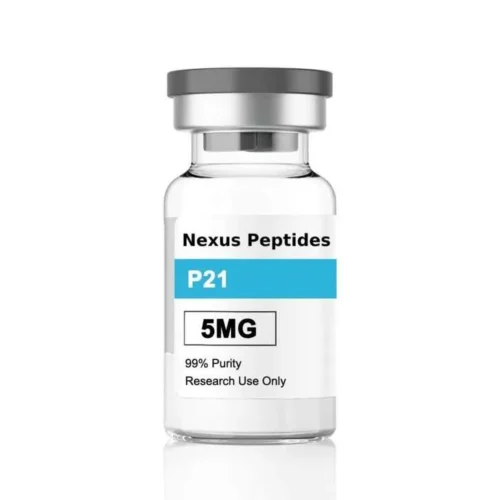
Buy P21: 5-10mg*10 vials
Price range: $130.99 through $230.99 Select options This product has multiple variants. The options may be chosen on the product page -
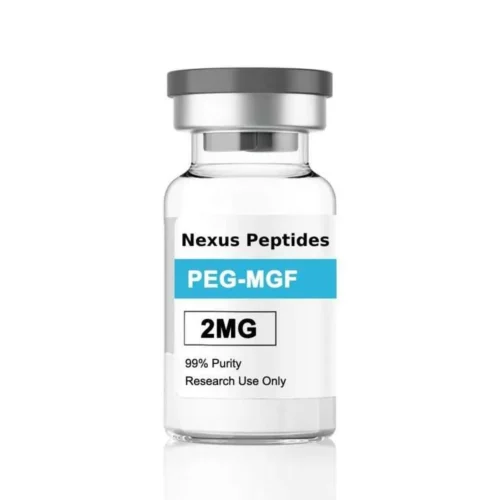
Buy PEG-MGF: 2mg*10 vials
$160.99 Add to cart -

FOXO4-DRI (Proxofim) 10mg*10 vials
$1,279.99 Add to cart -
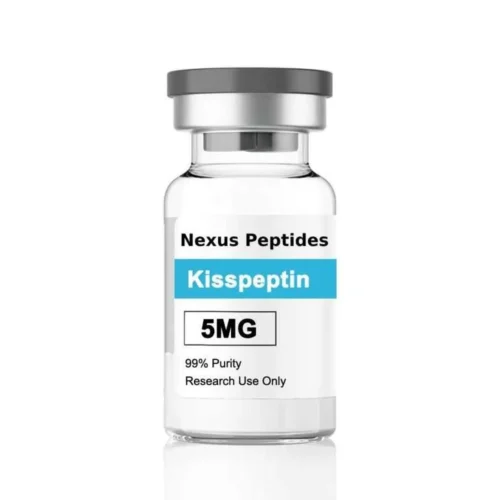
Buy Kisspeptin: 5-10mg*10 vials
Price range: $130.99 through $230.99 Select options This product has multiple variants. The options may be chosen on the product page
Reviews
There are no reviews yet.