
Retatrutide and the Next Generation of Multi-Receptor Metabolic Peptides
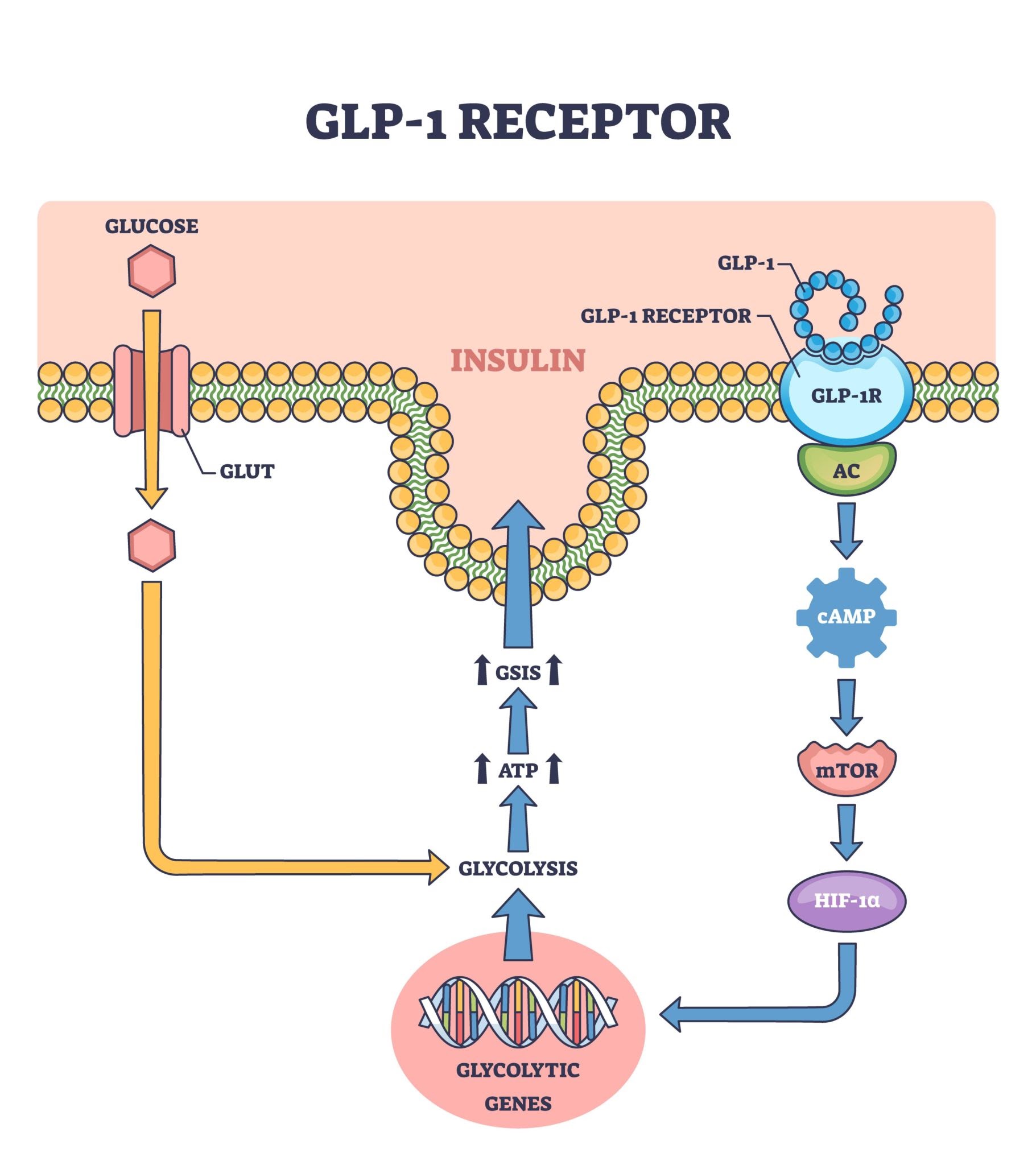
The success of GLP-1 receptor agonists such as semaglutide and the dual GIP/GLP-1 agonist tirzepatide has changed metabolic peptide research. Researchers now study peptides that can target several receptors at the same time. Retatrutide stands out as a triple agonist that targets the GLP-1, GIP, and glucagon receptors.
Why Triple Agonism Attracts Interest
Single-receptor GLP-1 agonists can produce significant weight loss and improve blood glucose control. However, researchers continue to look for ways to improve these outcomes.
Dual agonists add GIP receptor activity to GLP-1 signaling. Triple agonists take this approach one step further. They also activate the glucagon receptor. Preclinical and early clinical research links glucagon signaling to changes in energy use and liver fat.
As a result, researchers have shown growing interest in multi-receptor peptides. These molecules may influence several parts of metabolic regulation through one peptide.
How Retatrutide Works
Retatrutide is designed as a single peptide with activity at three receptors. These include the GLP-1, GIP, and glucagon receptors.
Each receptor plays a different role in metabolic signaling. GLP-1 and GIP influence glucose regulation and appetite. Meanwhile, glucagon can affect energy metabolism and liver function.
Therefore, researchers study retatrutide as a multi-receptor approach rather than as a conventional single-target peptide.
What Clinical Research Has Shown
Clinical trials have produced strong interest in retatrutide. In Phase 2 research, participants with obesity experienced substantial average weight reductions at higher doses over 48 weeks.
Some higher-dose groups experienced average weight reductions of more than 24% during the study period. These results attracted attention because they compared favorably with results from several established approaches.
However, researchers should interpret these findings within the design of each individual trial. Dose, study population, treatment duration, and other factors can affect the results.
Phase 3 programs now provide additional data. These studies examine retatrutide in obesity and related metabolic conditions. They also provide longer-term information that earlier trials could not fully address.
Retatrutide: Clinical Research vs. Laboratory Research
Retatrutide occupies a different position from many experimental research peptides.
Researchers continue to study numerous peptides mainly through laboratory and preclinical models. Retatrutide, in contrast, has entered formal clinical development. Controlled human trials therefore provide much of the current evidence surrounding the molecule.
This distinction matters when evaluating peptide research. Results from cell or animal models do not automatically predict human outcomes. Clinical trials provide a different level of evidence because they involve defined endpoints, participant monitoring, and structured safety evaluation.
For that reason, readers should evaluate retatrutide primarily through its clinical research rather than through informal claims about experimental peptide use.
The Broader Multi-Agonist Landscape
Retatrutide represents only one part of a much larger area of metabolic peptide research.
Researchers continue to investigate dual agonists that combine GLP-1 and glucagon activity. Other programs explore combinations involving GLP-1, GIP, and glucagon. In addition, researchers are studying approaches that involve amylin signaling.
At the same time, oral small-molecule GLP-1 therapies and longer-acting formulations continue to develop.
Despite these differences, many of these programs share a common goal. They aim to influence complementary metabolic pathways instead of relying on one receptor alone.
Understanding the Evidence
The evidence for retatrutide comes largely from controlled clinical trials. These studies use defined endpoints and statistical analysis. They also include structured safety monitoring.
This evidence differs from the preclinical research surrounding many experimental peptides.
When comparing peptide candidates, readers should therefore consider several factors. These include study design, sample size, treatment duration, participant characteristics, and regulatory oversight.
A promising result in a laboratory model does not carry the same weight as a well-designed human clinical trial.
Important Research Questions
Several questions remain open as retatrutide research continues.
First, researchers need more information about long-term safety. They also need to understand how durable the effects remain after treatment stops.
Another important question involves body composition. Researchers continue to examine how changes in fat mass compare with changes in lean mass during significant weight loss.
Population diversity also matters. Future studies can provide more information about how different groups respond to multi-receptor metabolic peptides.
In addition, gastrointestinal effects remain an important consideration. These effects commonly appear in research involving incretin-based therapies. Clinical programs therefore continue to monitor tolerability and evaluate dosing strategies.
What Retatrutide Means for Peptide Research
The development of retatrutide demonstrates how peptide chemistry can support multi-receptor drug design.
Instead of creating a molecule that acts on only one receptor, researchers can design a peptide to influence several signaling pathways. This approach is sometimes described as polypharmacology.
However, molecular design alone does not establish clinical value. Researchers need strong human evidence to determine whether a multi-receptor peptide provides meaningful benefits.
This distinction offers an important lesson for peptide education. Early laboratory findings can help identify promising molecules. Controlled clinical trials, however, provide the evidence needed to understand their effects in people.
The Future of Multi-Receptor Metabolic Peptides
As Phase 3 research develops, researchers will gain a clearer picture of how triple agonists compare with dual agonists and newer oral approaches.
Future data may also clarify questions about long-term outcomes, tolerability, body composition, and treatment durability.
For now, retatrutide remains an investigational agent. Its published results should therefore be considered within the broader clinical development program and the evidence available at the time.
The larger trend is clear, however. Multi-receptor metabolic peptides represent an important direction in modern peptide research. Retatrutide provides a prominent example of how researchers are combining several metabolic signals within a single peptide molecule.