BPC-157 in 2026: What the Research Actually Shows (and What It Doesn’t)
BPC-157, the synthetic 15-amino-acid fragment derived from a protective protein found in human gastric juice, remains one of the most discussed research peptides in 2026. Search volume and community interest place it near the top of non-GLP-1 compounds, and recent regulatory attention has only increased scrutiny.
What is often missing from online discussions is a clear separation between the volume of preclinical data and the near-absence of rigorous human clinical evidence.
Origin and Structure
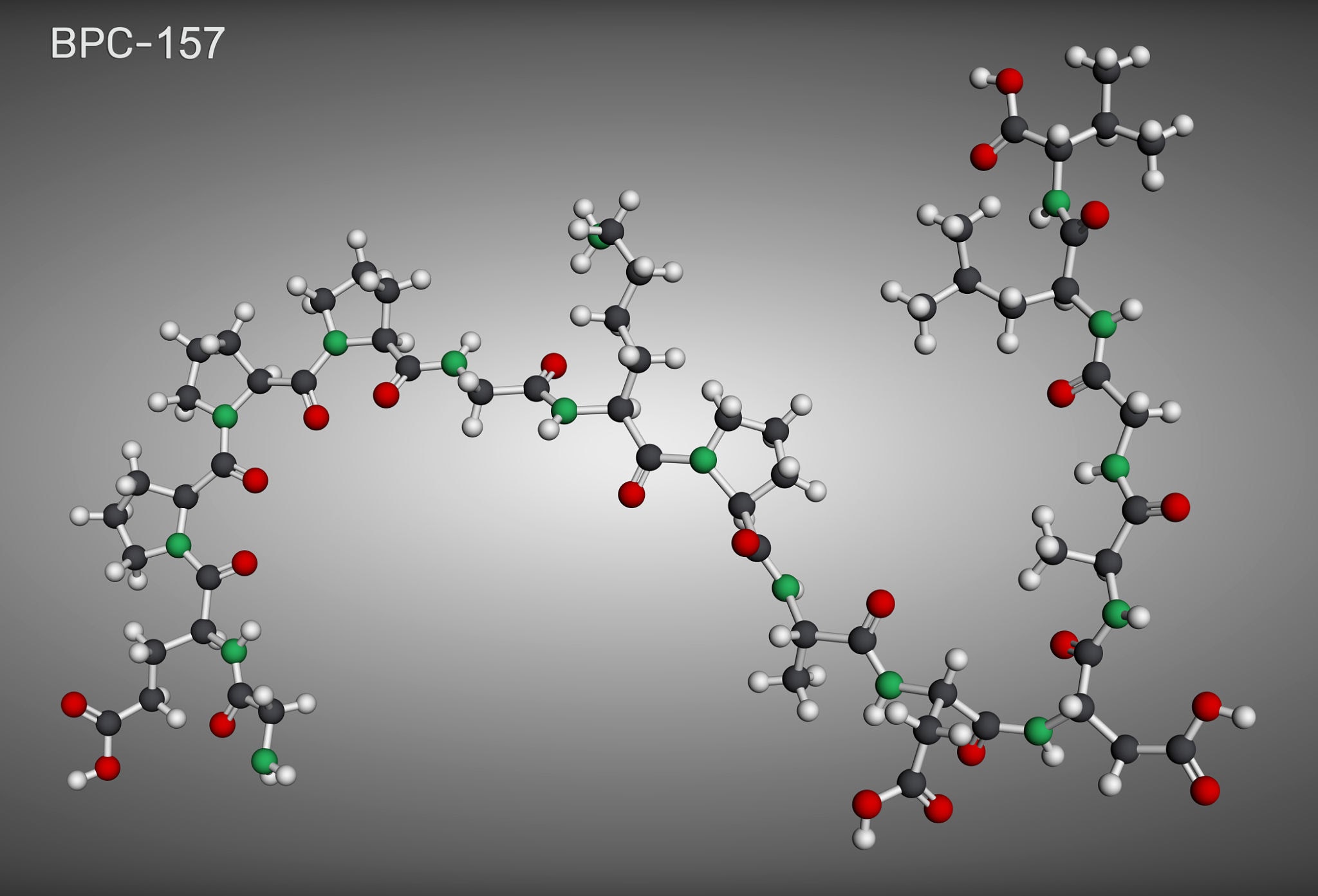
BPC-157 (Body Protection Compound-157) is a partial sequence of a larger protein naturally present in gastric juice. Researchers first described it in the context of gastric mucosal protection. The synthetic version used in laboratory work is typically the acetate or arginate salt form. Its relatively small size and reported stability in gastric environments contributed to early interest in gastrointestinal models.
Preclinical Research Focus Areas
The bulk of published work comes from animal models, primarily rodents, with a substantial portion originating from a single research group. Areas examined include:
- Tendon and ligament healing models
- Muscle injury and recovery
- Gastric and intestinal mucosal integrity
- Angiogenesis (new blood-vessel formation) in injury settings
- Inflammatory markers in various tissue-damage paradigms
In these models, investigators have reported accelerated healing rates, changes in growth-factor expression, and modulation of nitric-oxide pathways. Some studies have explored interactions with the nitric-oxide system and effects on blood-vessel outgrowth. These findings are interesting from a basic-science perspective, yet they remain confined to controlled laboratory conditions that do not automatically translate to human physiology.
Human Evidence: The Critical Gap
As of mid-2026, high-quality, large-scale, randomized, controlled human trials evaluating BPC-157 for tissue repair, gastrointestinal conditions, or other promoted uses are lacking. Existing human data are limited to small, often uncontrolled observations or case-series-style reports that do not meet the standards required for clinical claims. Regulatory reviewers have repeatedly noted the insufficiency of evidence for both efficacy and long-term safety in humans.
This distinction matters. Animal data can generate hypotheses; they do not establish clinical utility or safety profiles in people.
Regulatory Context in 2026
In July 2026 the FDA’s Pharmacy Compounding Advisory Committee narrowly recommended that BPC-157 (along with several other peptides) be considered for the Section 503A Bulks List. The recommendation is advisory, not a final agency decision, and FDA staff had previously highlighted insufficient safety and effectiveness data. The final determination rests with FDA leadership. Regardless of compounding status, BPC-157 is not an FDA-approved drug for any indication.
Mechanism at a High Level
Proposed mechanisms drawn from preclinical literature include influence on growth-factor signaling, modulation of inflammatory cascades, and support of angiogenesis in damaged tissue. These remain working hypotheses rather than fully mapped pathways confirmed in human systems. Researchers continue to investigate receptor interactions and downstream effects, but definitive mechanistic clarity in humans is not yet available.
Safety Considerations in Research Settings
Preclinical toxicity data have generally been favorable in the doses and durations tested in animals. However, the absence of comprehensive human pharmacokinetic, long-term safety, and drug-interaction studies means that safety in people cannot be assumed from animal results. Contaminants, incorrect identity, or degradation products in research materials introduce additional variables that laboratory testing (HPLC, mass spectrometry) is intended to control.
Practical Implications for Researchers
Anyone evaluating BPC-157 for laboratory work should prioritize:
- Independent third-party Certificates of Analysis showing HPLC purity and identity confirmation
- Batch-specific documentation rather than generic claims
- Awareness that research-grade material is not pharmaceutical-grade medication
- Clear experimental design that accounts for the limited translational data
Nexus Peptides Lab emphasizes transparent documentation so researchers can evaluate materials against these standards.
Limitations and Responsible Framing
BPC-157 illustrates a broader pattern in the peptide field: enthusiastic discussion often outpaces the evidence base. Preclinical signals of tissue protection are real and scientifically interesting. They do not constitute proof of human therapeutic benefit. Claims that frame BPC-157 as a proven healing agent or medical treatment go beyond what the current literature supports.
Future well-designed human studies would be required to determine whether any of the animal observations hold clinical relevance. Until then, the responsible position is to treat BPC-157 as an experimental research compound with a substantial preclinical literature and a thin human evidence base.
Researchers and readers interested in the compound benefit most from reading primary papers, examining study design limitations, and maintaining a clear distinction between laboratory findings and clinical application.